Start with your service, not a standard presentation.
The Qodeup demo is an assessment for restaurants and groups in which service flow, venue count, POS, products and integrations are reviewed before a configuration is proposed.
How it works
A demo prepared for your service.
We first understand your context, then build a useful session—not a generic presentation.
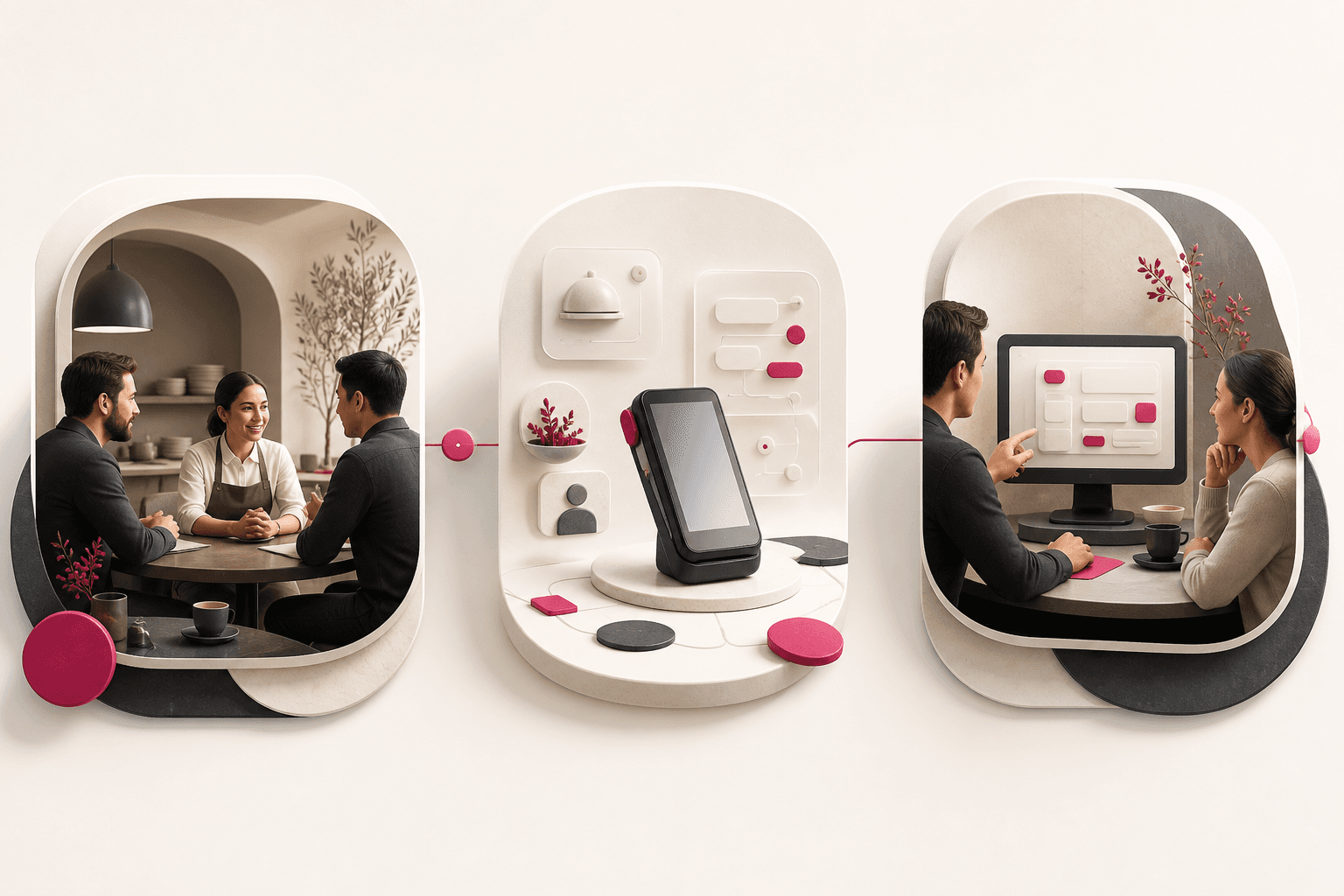
First, we get to know you.
We discuss your format, service flow and what you want to improve.
Then, we prepare the demo.
We tailor it to your needs, the products and systems you are evaluating.
Finally, we run the demo.
Together, we look at the flows most relevant to your case.
Context
Venue count, format, peaks and project priorities.
Ecosystem
POS, devices and tools already present across venues.
Objective
The operating or commercial problem you want to address first.
How it works
What happens after you submit.
Qualify
The team reads the information and identifies the right expertise.
Discuss
The demo is prepared around your case and relevant flows.
Next steps
When there is a fit, we define technical analysis, pilot or proposal.
Inside the product
The more context you share, the more useful the demo.
Number of venues and operating countries.
Current POS and payment provider.
Indicative volume or covers and service peaks.
Products and processes you want to evaluate.
Tell us about your project
Prepare a demo that speaks to your work.
Complete the form with the essential details and the team will follow up to arrange the conversation.
Book a demoFAQ
Frequently asked questions
Is the demo free?
Yes. It is used to check whether the case and platform fit before any proposal.
Who should attend?
For multi-site projects, operations and—where relevant—IT or finance should join.
How long is the demo?
Duration depends on scope. The team proposes a meeting that matches the information shared.